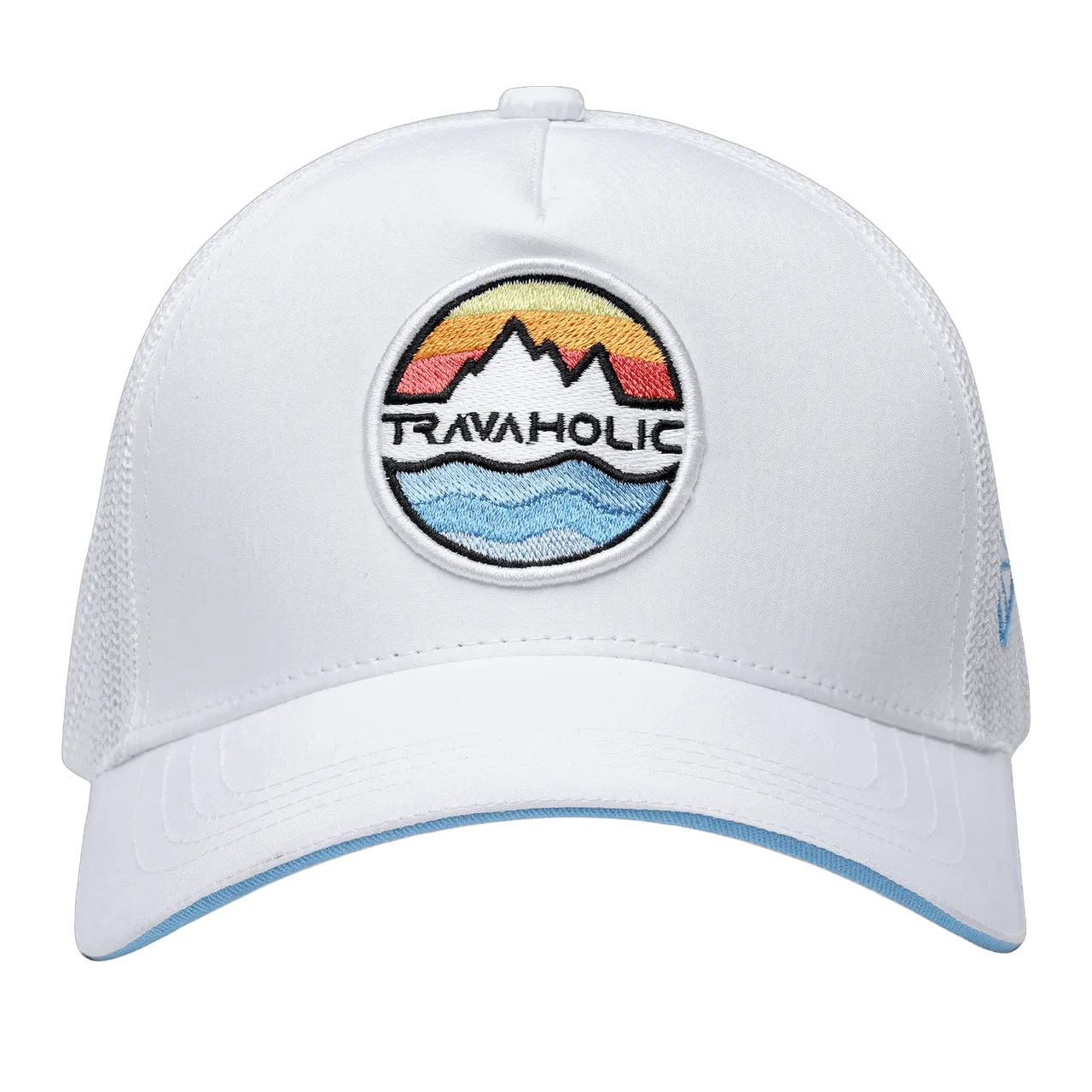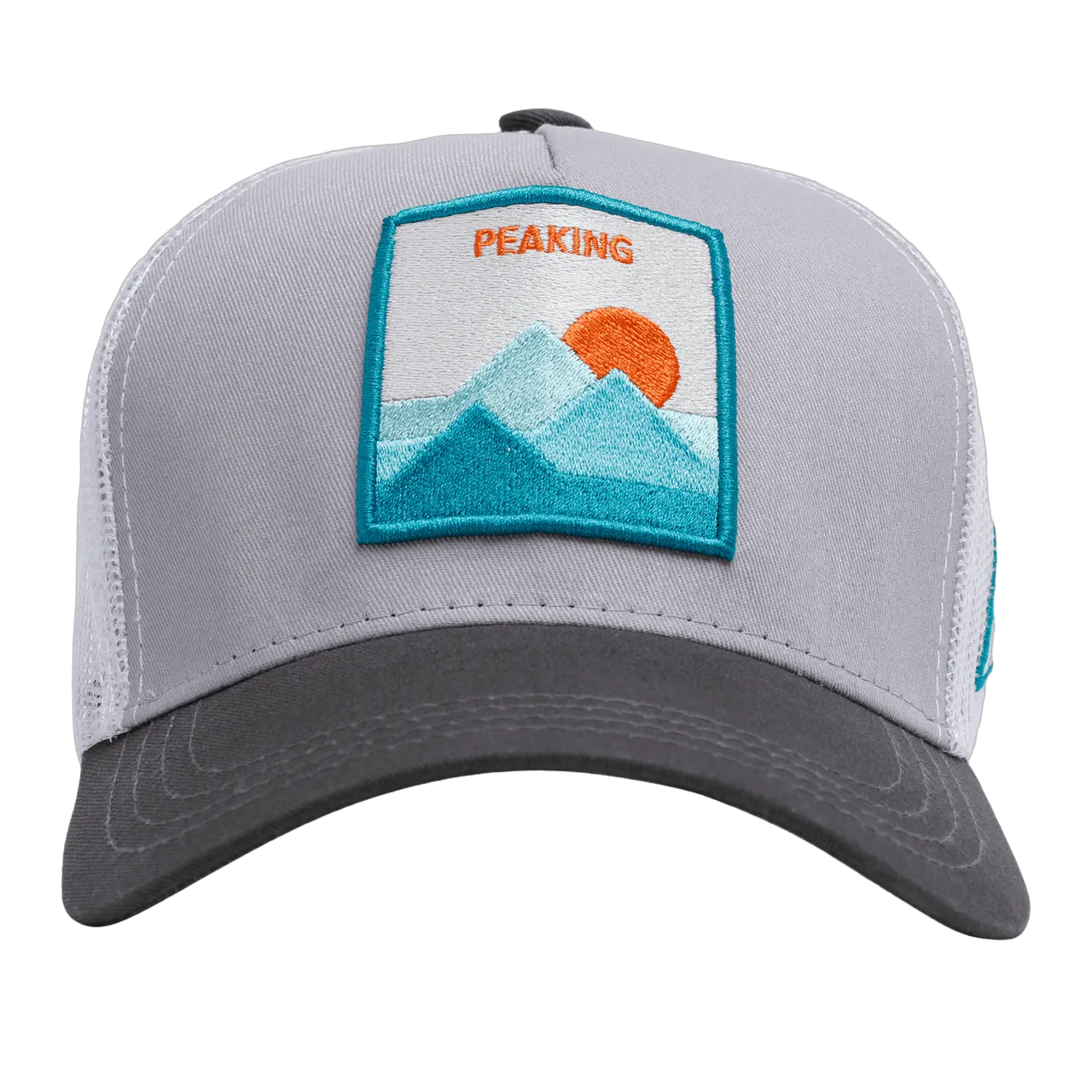
There's a specific kind of quiet that only shows up above a certain altitude — thinner air, fewer birds, your own breathing suddenly the loudest thing around. Peaking was sketched from exactly that moment: not the summit photo everyone takes, but the switchback right before it, the one where you stop talking because talking costs oxygen you'd rather spend on the next step.
Every mountain trail has a version of this. The view doesn't actually arrive all at once — it leaks in, ridge by ridge, until you're far enough up that turning around feels like the harder option. That's usually the exact point where a cap starts mattering more than you expected: sun at altitude is meaner than sun at sea level, and squinting through the last hour of a climb is its own kind of miserable.
The camera never quite gets it. Thin light, cold hands, a view that's more felt than seen — Peaking exists because a sketch could hold what a photo kept losing.
Travaholic Snow came from the same range, a season later — the version of altitude that isn't about climbing anymore, just about being there once the snow's settled in and the whole mountain's gone quiet in a different way. Breath showing before your coffee does. Fewer people. The same thin light, colder.
If you're planning a trip that involves any real altitude — a trek, a pass, a viewpoint that requires actual effort to reach — the gear advice is boring but true: layers you can shed fast, a cap with a real brim for the glare, and a phone you're willing to leave in your bag for the last hour. The view has never once been improved by someone checking their notifications first.