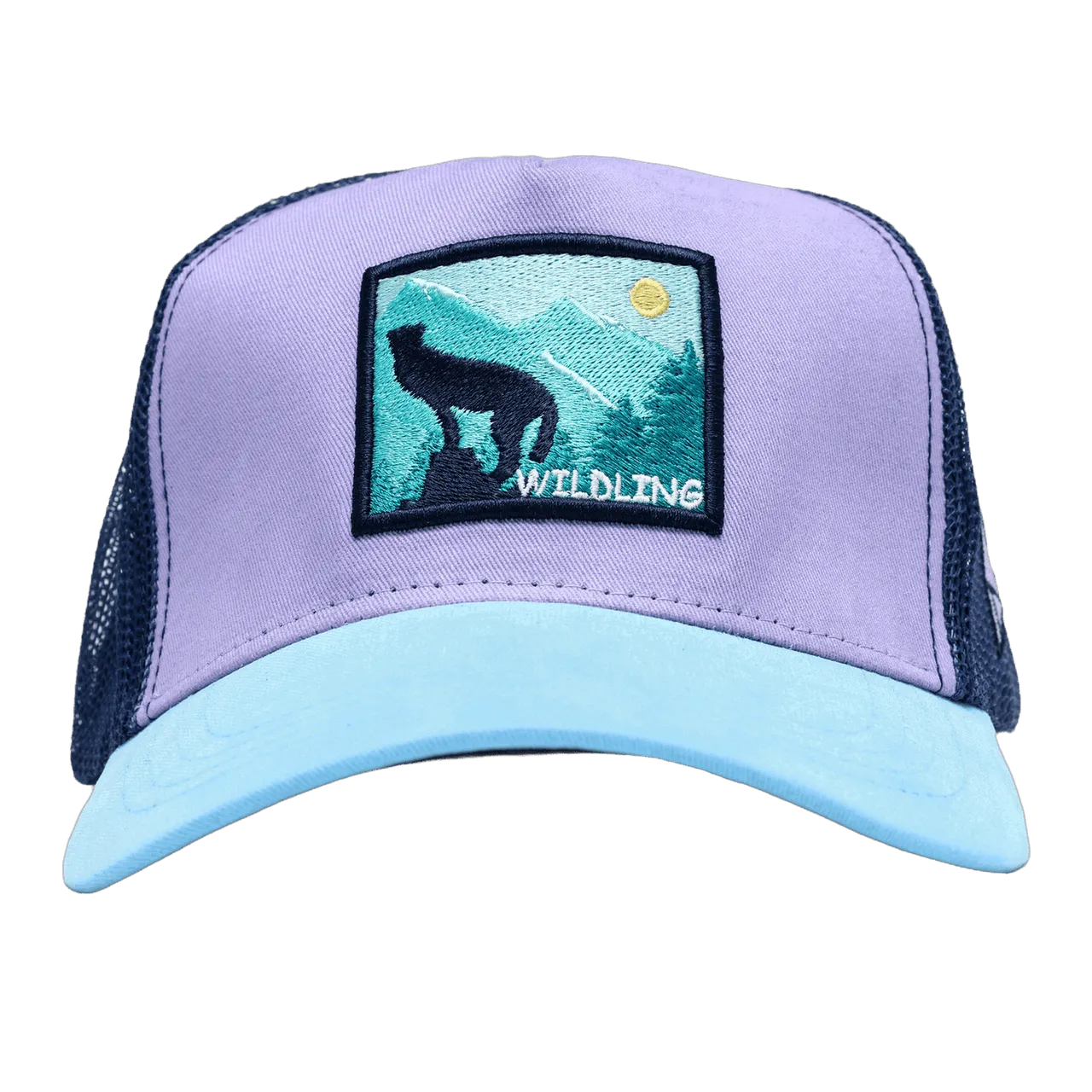
Somewhere on a forest trail, without much warning, your phone goes from four bars to one to a small crossed-out triangle, and something in your shoulders finally lets go. It's a strange thing to look forward to — the exact moment you become uncontactable — but if you've spent any real time in the wild, you know the feeling. It's not about the view yet. It's about the quiet before the view.
Wildling came out of an afternoon like that — light going, trail narrowing, and then a wolf on a rock that only one person on the trek actually saw, watching the group pass without much interest in being watched back. Nobody could get a photo. The signal was long gone. So it became a sketch instead, and then a cap, which might be a more honest record of the moment than a photo would have been anyway — photos can be faked, a memory this specific mostly can't.
Junglee means wild in a way that doesn't quite translate to English — a little feral, a little free, entirely unbothered by your schedule.
Junglee, its sibling Chapter, came from the same general chaos a few hours later — properly, gloriously lost for an afternoon on a trek that had a route plan nobody was following anymore. Nobody minded. That's the part that's hard to explain to someone who hasn't done it: getting lost in the wild, with the right company and enough daylight left, doesn't feel like a mistake. It feels like the trip actually starting.
If you're planning time off signal — actually off, not just doom-scrolling in airplane mode — bring less than you think, tell someone roughly where you'll be, and let a few hours go unplanned. The best stories from Into The Wild were never the ones on the itinerary.