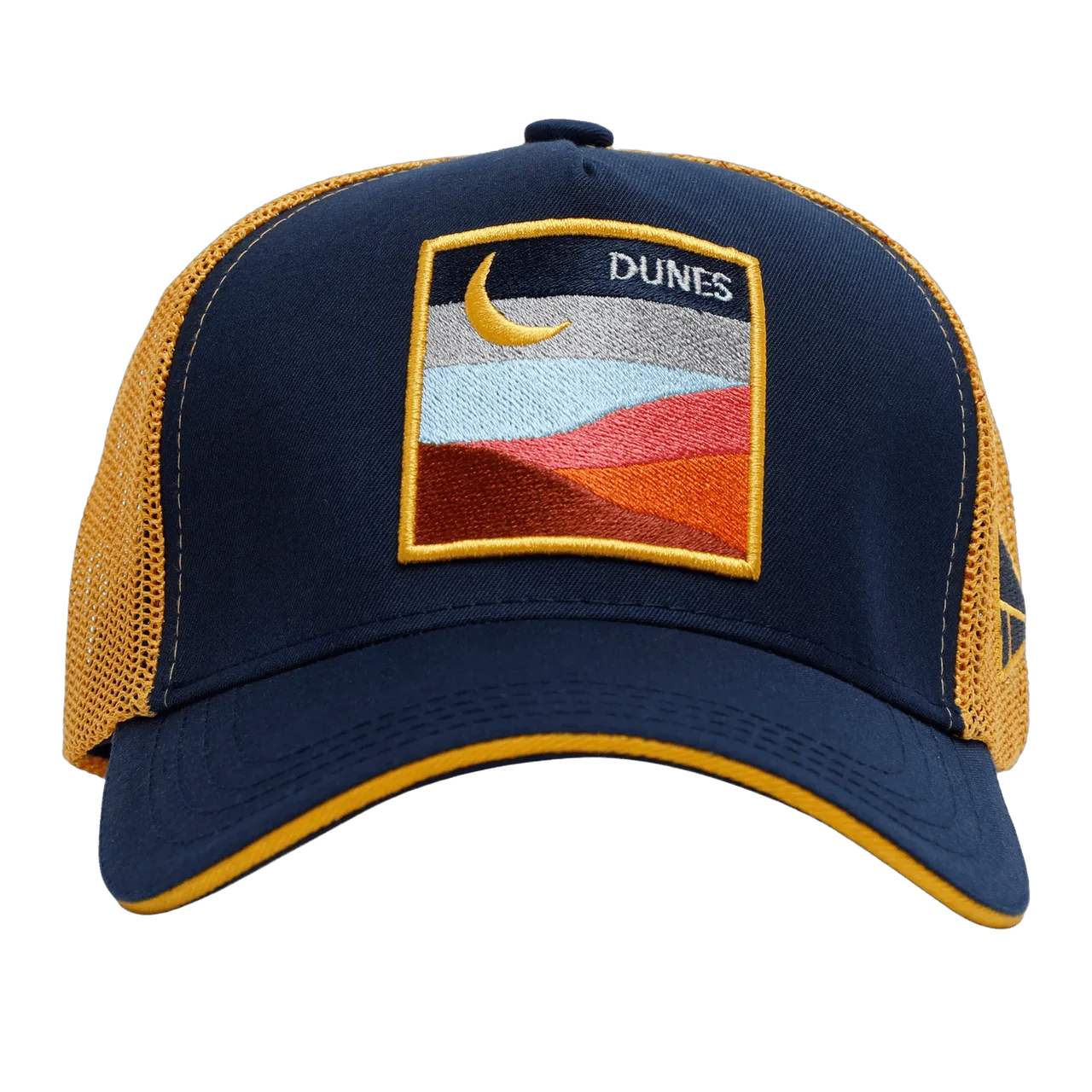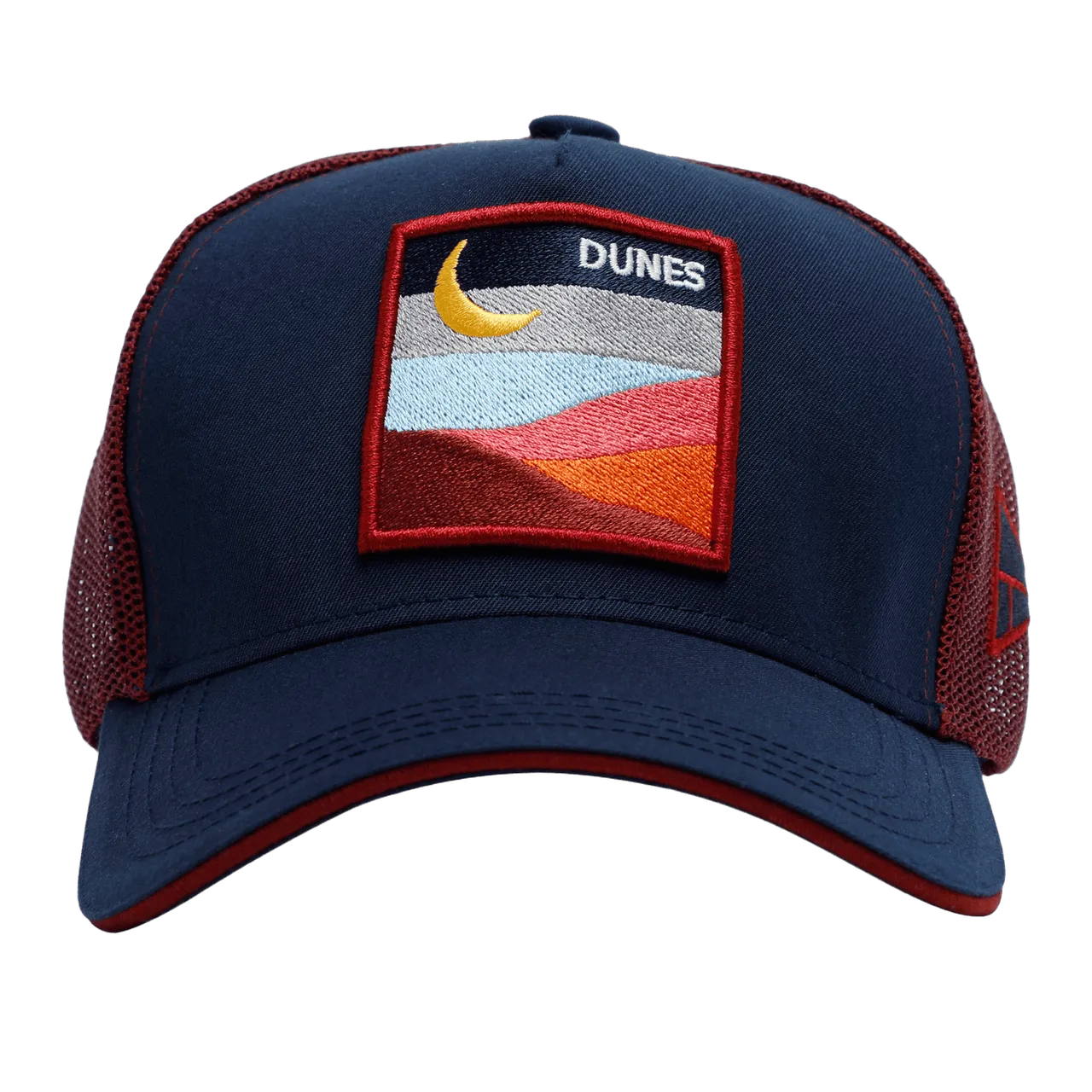
There's a specific window in the desert — roughly 6 to 10 a.m. — when the light is doing something it won't repeat for the rest of the day, and the heat hasn't shown up to ruin it yet. Everything worth photographing, everything worth remembering, tends to happen inside that window. The rest of the day is mostly about surviving until the next one.
Pack for the window, and pack for the survival, separately.
For the good hour: a light layer you can shed fast, since the temperature swing from sunrise to mid-morning is bigger than you'll expect. A cap with an actual bill — not a beanie, not a bandana, something with a brim that keeps the low-angle sun out of your eyes while you're trying to get the shot. This is the entire reason Dunes Maroon and Dunes Yellow exist as two separate Chapters instead of one: the maroon reads right in the last light before sunset, the yellow reads right in the first light after sunrise. Same dunes, different hour, different cap.
The thing everyone forgets is a second layer for your lips and the back of your neck. Sunburn in the desert doesn't announce itself until it's too late to undo.
For the survival: more water than feels reasonable, salt of some kind — electrolyte tabs, namkeen, whatever you'll actually eat — and sunglasses that block glare off sand, which is meaner than glare off water. A buff or light scarf for when the wind picks up in the afternoon and starts moving sand at ankle height. Closed shoes, not sandals, unless you enjoy vacuuming your footwear every twenty minutes.
What you don't need: anything heavy, anything black that isn't actively being worn on your head, and a strict itinerary. The desert rewards people who get up early and otherwise let the day happen to them. Bring a cap that can take the sun, bring enough water for the boredom in between the good hours, and let the rest sort itself out.